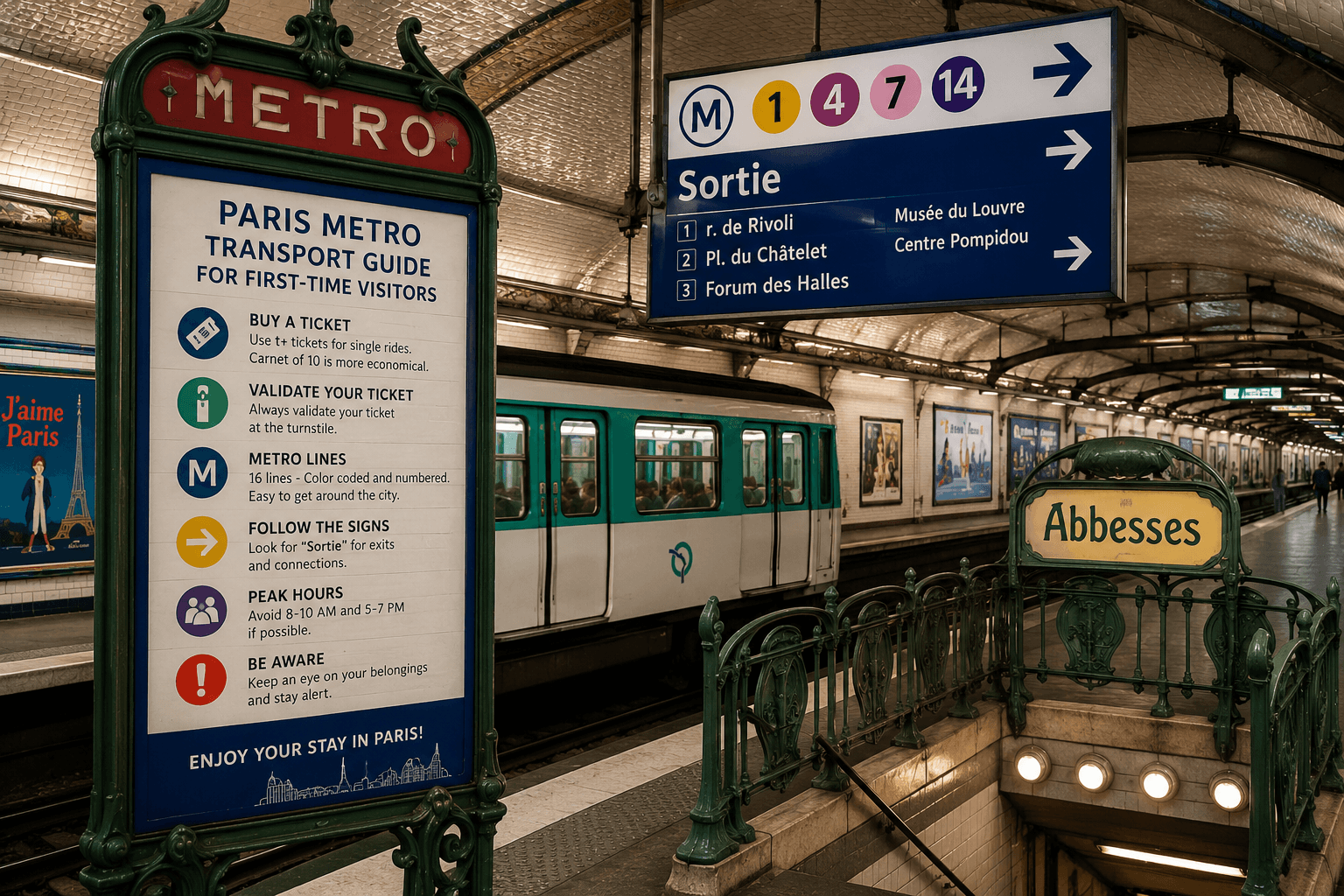
Paris can feel overwhelming to first-time visitors. The metro network is extensive but not always intuitive. Taxis can be hard to find at the wrong time of day. And knowing when to walk versus when to take transport requires familiarity with the city's geography. This guide cuts through the complexity and gives you the practical information you need from the moment you arrive.
Getting from the Airport First
Your first transport decision happens before you see the city: how to get from CDG or Orly to your hotel. For first-time visitors, a private airport transfer is the clearest option. Your driver meets you by name in the arrivals hall, handles your luggage and takes you to your hotel without any decisions required on your part. It is the simplest possible introduction to Paris.
If you prefer public transport, the RER B from CDG connects to Gare du Nord, Chatelet and several other central stations. Buy your ticket at the machine before going through the barriers. Keep your ticket until you exit, as inspectors are common.
The Paris Metro
The metro is the fastest way to move around central Paris once you are familiar with it. There are 16 lines, numbered 1 to 14 plus lines 3bis and 7bis. The most useful for tourists are:
- Line 1 (east-west, passing through Chatelet, Louvre, Champs-Elysees, La Defense)
- Line 4 (north-south, connecting Montmartre to Montparnasse via the centre)
- Line 6 (elevated in sections, passing near the Eiffel Tower)
The Navigo Easy card, available at any metro station, stores single tickets or carnet bookings. Do not underestimate how much time it takes to navigate the staircases and corridors at large interchange stations.
When to Take a Taxi
Taxis in Paris are reliable but not always easy to find at busy times. They can be hailed in the street when the illuminated sign on the roof is green, or found at designated taxi ranks near major stations, hotels and monuments. Avoid accepting rides from unofficial drivers who approach you in airport arrivals or train stations. For journeys to the airports, major train stations or anywhere with significant luggage, a pre-booked transfer is more reliable than trying to hail a taxi on the street.
Walking in Paris
Paris is a remarkably walkable city, and many of the most famous sights are closer together than they appear on a map. From Notre-Dame to the Louvre is about 20 minutes on foot. From the Louvre to the Eiffel Tower is about 45 minutes, passing through the Tuileries Garden and the Invalides. Walking is often faster than the metro for short distances and gives you a much better sense of the city.
Velib Bike Share
Paris has an extensive bike-sharing scheme called Velib. Docking stations are located throughout the city. A short-term subscription can be purchased online or at the docking station using a credit card. The city has greatly expanded its cycling infrastructure in recent years, with protected lanes on many of the main streets. For a first-time visitor, Velib works well for flat routes in the central arrondissements.
Key Phrases for Getting Around
Even a basic familiarity with French makes transport easier. The essentials: "Un ticket, s'il vous plait" (one ticket, please), "Ou est la sortie?" (where is the exit?), "Je voudrais aller a..." (I would like to go to...). Most transport staff in Paris speak some English, particularly at major stations and airports.
Samantha Travels offers private transfers from both CDG and Orly for first-time visitors to Paris. Book your airport transfer to Paris and begin your trip without any transport decisions to make.