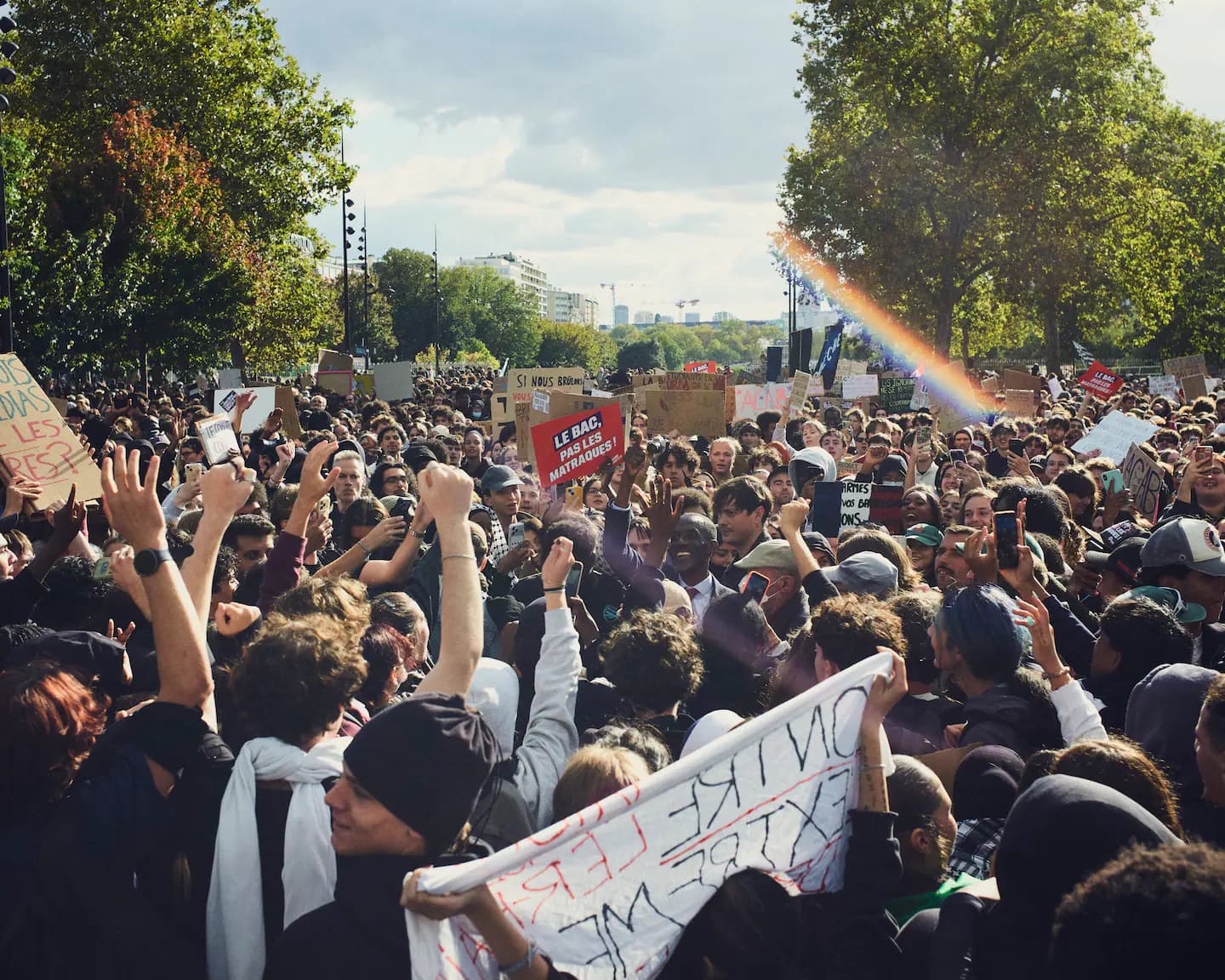
Short answer: yes, you can still travel to Paris and book a private transfer. The violent scenes of 17 and 18 October 2026 were concentrated around protest routes in a few central districts, no government advises against travel to France, and flights at CDG and Orly are operating. The main risks for visitors are crowds on protest days and slower roads to the airports, and both can be planned around.
This guide was written on 19 October 2026 by our team in Paris, for travellers who are wondering whether to keep their plans. We will update it as the situation changes.
Key Facts at a Glance
- What happened: nationwide protests over the cost of living and school conditions on 17 October, with around 550,000 people in France and 110,000 in Paris, followed by rioting and looting in parts of central Paris on 17 and 18 October.
- Official advice: the US advisory for France is unchanged at Level 2 (exercise increased caution). European governments ask their citizens to avoid large crowds. No one advises against travel.
- Airports: CDG and Orly are open and flights are operating. Road access can be slower on blockade days.
- Next dates to watch: 21 October (truck and coach drivers plan to block roads around Paris, possibly for several days) and 5 November (national day of mobilisation).
- Private transfers: Samantha Travels is operating normally, 24/7, for airport, city and long-distance trips.
What Happened in Paris on 17 and 18 October 2026?
The protests began as a student movement in mid-September and widened into a national movement against the cost of living and fuel prices. On Saturday 17 October, hundreds of thousands of people marched across France. Most marches were peaceful, but groups of rioters broke away from the Paris procession.
Shops were smashed and looted around Place de la République. Luxury boutiques on Rue Saint-Honoré, including Dior, Celine and Goyard, were targeted, as was the Galeries Lafayette department store. On Sunday 18 October, new clashes broke out around République, Châtelet-Les Halles and Boulevard de Sébastopol, and the BHV Marais department store was broken into. Videos shared online also showed an elderly tourist couple being robbed during the unrest.
The French Interior Ministry reported nearly 2,400 arrests across France on the Saturday. President Macron addressed the nation on Sunday evening and said that "nothing justifies" the violence.
Which Areas of Paris Were Affected?
The trouble followed the protest routes and the unauthorised gatherings that formed after them. The areas most affected were:
- Place de la République and the surrounding streets (3rd, 10th and 11th arrondissements)
- Châtelet-Les Halles and Boulevard de Sébastopol (1st and 4th)
- The Marais around the BHV department store (4th)
- Rue Saint-Honoré and the department stores on Boulevard Haussmann (1st, 8th and 9th)
Outside protest hours and away from these streets, daily life in Paris continues. Hotels, restaurants and museums are open. The difference is that protest days now call for a little planning: knowing where the marches go, and not crossing the city on foot or by metro at the wrong moment.
What Do Governments Advise Travellers?
No government has advised its citizens against travelling to France. The US Embassy in Paris issues demonstration alerts before each major protest day and keeps France at Level 2, the same level it has held for several years. Several European governments now ask their citizens to avoid large crowds and to exercise caution, without a formal warning against travel.
If you are travelling from the United States, signing up to the State Department's STEP programme means you receive the embassy alerts directly by email.
Are CDG and Orly Airports Open?
Yes. Both airports are open and flights are operating. Some airline crew unions filed strike notices for 17 to 21 October, so check your flight status with your airline on the day before you travel.
The real issue is road access. In mid-October, around 2,000 taxi drivers staged a slow-moving protest from Porte Maillot towards CDG, which caused long delays on the A1 motorway. On 17 October, 25 metro stations were closed at the request of the Police Prefecture. Truck and coach drivers have called for blockades of the roads around Paris from 21 October. On days like these, journey times to the airports and train stations can be much longer than usual. Our guide to real travel times from CDG to Paris explains how strikes affect the drive, and our rush hour guide shows which hours to avoid.
What Is Planned in the Coming Weeks?
- 21 October: truck and coach drivers plan to block roads in and around Paris, possibly for several days.
- Throughout October: student protests and school blockades may continue, often called at short notice.
- Weekends: new Yellow Vest gatherings are possible if turnout stays high.
- 5 November: unions have called a national day of mobilisation for public and private sector workers, retirees and students.
Dates can change quickly. Our team follows the Police Prefecture announcements every day and adapts every booking to them.
Practical Safety Tips for Visitors to Paris
- Stay away from marches and gatherings, even peaceful ones. Trouble usually starts at the end of a procession, in the late afternoon and evening.
- On protest days, avoid République, Châtelet-Les Halles and the streets announced for the march route.
- Keep valuables out of sight. Designer shopping bags, expensive watches and jewellery attract attention in crowded areas.
- Do not stop to film the clashes. Many people caught up in the violence were bystanders.
- Leave extra time for any departure to the airport or a train station, and confirm your flight the day before.
- Keep your phone charged and save your hotel address and your driver's number before you go out.
Can You Still Book a Private Transfer in Paris?
Yes. We remain available for every trip request, whatever the situation in the city. Strikes, blockades and protests are part of driving in Paris, and our chauffeurs know how to work around them. A private transfer is also the most protected way to move through the city on difficult days: you go from your door to your destination in a private vehicle, without waiting at a taxi rank, a station or a metro platform.
Here is how we organise each journey during protest periods:
- The route is checked before every departure against the announced marches, closed stations and blockades, and adjusted during the drive if needed.
- The pickup point can be moved to a quiet side street or your hotel's other entrance if your street is close to a protest route.
- We advise you on timing. For an airport departure on a blockade day, we will suggest leaving earlier and tell you why.
- At the airport, your chauffeur tracks your flight and meets you inside the arrivals hall, with 60 minutes of free waiting after landing. See our Paris airport transfer service and our VIP greeter service.
- Your luggage and shopping stay in the vehicle, out of sight, from pickup to drop-off.
- The price is agreed in advance, even if a diversion makes the journey longer.
- You can reach us at any time on WhatsApp, 24/7, and we usually answer within 30 minutes.
If you plan to shop or visit several places in one day, hourly hire keeps a car and chauffeur at your disposal, so you never have to look for a ride in a busy area. And if you would rather spend a protest day outside the city, our private day trips to Giverny, Champagne, Normandy or Mont-Saint-Michel leave from your hotel.
Frequently Asked Questions
Is it safe to travel to Paris right now?
Yes, with the usual precautions. The violence of 17 and 18 October 2026 was concentrated in a few central areas during and after the protests. No government advises against travel to France. Avoid crowds on protest days and follow the official alerts.
Are flights to and from Paris operating?
Yes. CDG and Orly are open and flights are operating. Some crew strike notices covered 17 to 21 October, so check your flight with your airline the day before you travel.
Should I cancel my trip to Paris?
For most travellers, no. Plan your days around the announced protest dates, keep a margin for airport departures and choose transport that does not depend on the metro or taxi ranks.
Will Samantha Travels still pick me up if there are protests?
Yes. We accept and carry out bookings whatever the situation, adapting the route, the pickup point or the departure time when needed. Your safety and your schedule come first.
What happens if my street is blocked?
We contact you before pickup and agree on a nearby meeting point that is easy and quiet, such as a side street or another hotel entrance.
Will my transfer cost more if the journey takes longer?
No. The price is fixed when you book. A diversion around a protest does not change it.
Can I cancel my transfer if my plans change?
Yes. Cancellation is free up to 24 hours before pickup. See our booking terms for details.
Which areas of Paris should I avoid?
On protest days, avoid Place de la République, Châtelet-Les Halles, Boulevard de Sébastopol and the announced march routes. Outside those times and places, the city is open as usual.
Travelling to Paris Soon?
Tell us your dates, flight and hotel, and we will plan your journey around the situation of the day. Request your private transfer or message us on WhatsApp: we answer around the clock. For more planning advice, read our first-time visitor transport guide, our CDG to Paris guide and our Orly to Paris guide.
Sources
- France 24: Macron says "nothing justifies" violence in protests (18 October 2026)
- Al Jazeera: Paris left reeling as student-led protests turn chaotic (18 October 2026)
- CNN: Half a million protesters sweep France (17 October 2026)
- US Embassy in France: Demonstration alert, 17 October 2026
- US News (Reuters): European governments warn citizens over security in France (19 October 2026)
- Sortiraparis: Strike on 17 October 2026, what to expect in Paris
- Connexion France: Strike and protest dates in France this October