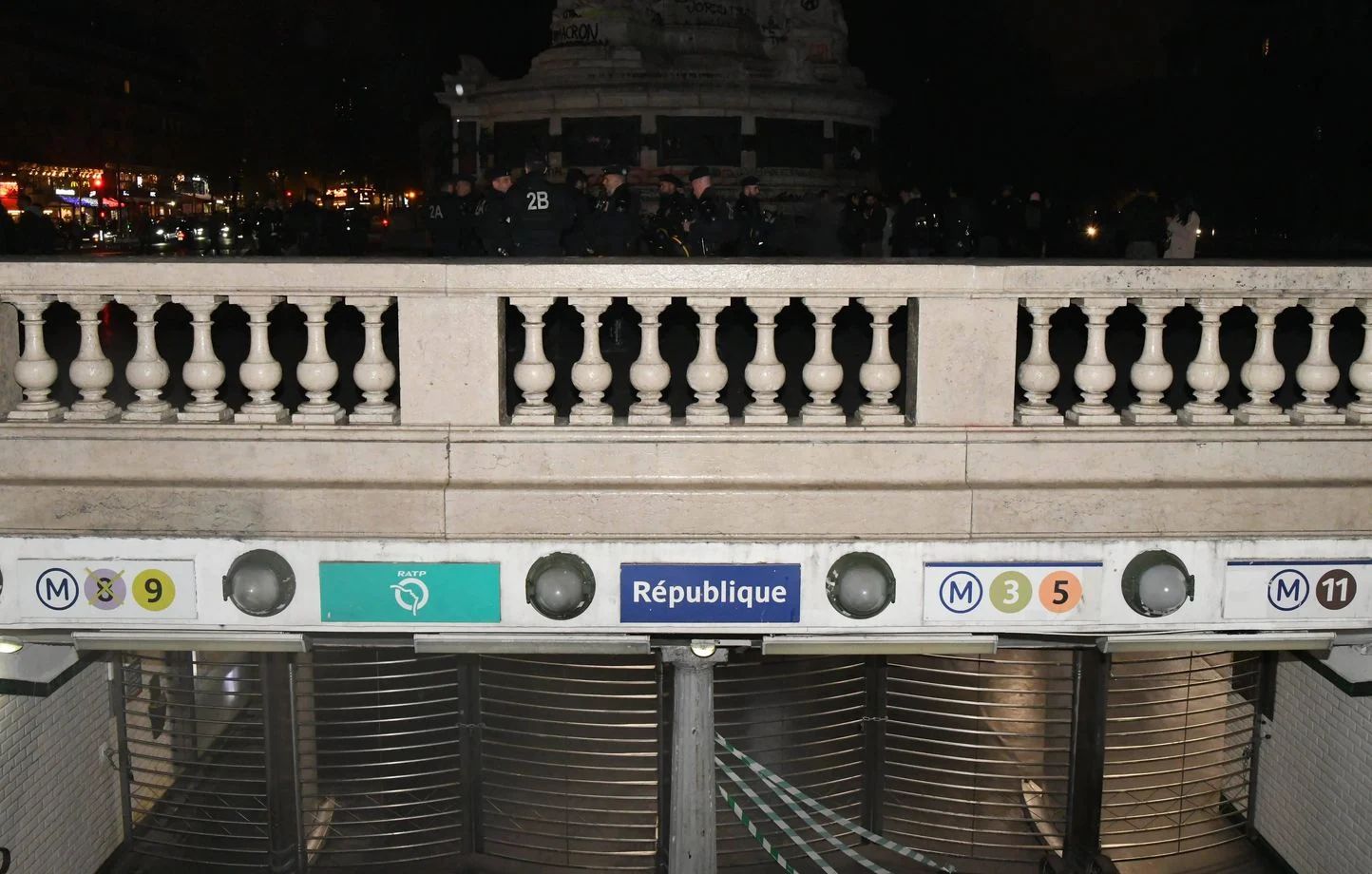
Short answer: since 19 October 2026, Paris has had a partial night curfew from 11 pm to 6 am around Place de la République and Châtelet-Les Halles, the two districts hit hardest by the looting of 17 and 18 October. It does not apply every night: it last applied on the nights of 31 October and 1 November and was due to end at 6 am on Monday 2 November, and no new curfew had been announced at the time of writing. On protest days, avoid the announced march route and expect many metro stations to close, as on 31 October (more than 40) and 5 November (25), when most closures were far from the march, around the Champs-Élysées, Concorde and Saint-Germain. Away from these places and outside protest hours, Paris works as usual.
Last updated: 6 November 2026. We update this guide after each protest day.
Travelling in the next few days? We operate 24/7, strike days included, from €110 per vehicle between CDG or Orly and central Paris, with free cancellation up to 24 hours before pickup. Message us on WhatsApp, we usually reply within 30 minutes.
Key Facts (6 November 2026)
- Curfew zones: around Place de la République (3rd, 10th and 11th arrondissements) and Les Halles (1st arrondissement), from 11 pm to 6 am.
- Curfew dates: every night from 19 to 26 October (République only on the last night), then again on the nights of 31 October and 1 November, until 6 am on Monday 2 November. No new date announced at the time of writing.
- Minors: a separate curfew from 9 pm to 6 am for unaccompanied under-18s applied in several areas, including Étoile, the Champs-Élysées, Madeleine and Gare Saint-Lazare, on the nights of 30 October to 2 November.
- Protest days: metro stations close along the route and in the centre, as more than 40 stations did on 31 October and 25 did on 5 November.
- Next date to watch: Saturday 7 November, with the Yellow Vests' gathering at Place de la Concorde banned by the Police Prefecture, a union march from République to Nation at 2 pm, and at least 14 metro stations closed.
- March routes: the usual route is Bastille to Nation, in the east of Paris, but the police moved the marches to the outer boulevards on 24 October (Porte d'Italie to Porte de Vincennes) and 31 October (Porte de Bagnolet to Porte de Charenton). On 5 November, the march went from République to Nation along Boulevard Voltaire.
- Golden rule: check the route of the day, then stay well away from it, especially at the end of the march.
Is There a Curfew in Paris? Zones, Hours and Dates
Not every night, and never in the whole city. The Paris curfew applies from 11 pm to 6 am around Place de la République and around the Les Halles shopping district, as CBS News reported when it was introduced on 19 October. The authorities also banned gatherings in Paris after 8 pm. The Police Prefecture extended it until Monday 26 October, kept it only around République on that last night, then reinstated it in both areas for the nights of 31 October and 1 November (order no. 2026-01485 of 30 October), until 6 am on Monday 2 November, according to Sortiraparis. Residents, shopkeepers, people who work in the area and emergency services are exempt. No new curfew had been announced at the time of writing, but it has come back before a protest weekend, so check the news before a late evening in these areas. The first extension was reported by AFP. It is enforced: on 24 October, a protester was fined 135 euros for holding a placard inside a curfew zone.
A separate curfew targeted minors: from 9 pm to 6 am, unaccompanied under-18s were not allowed on the street in several areas, including Étoile, the Champs-Élysées, Madeleine and Gare Saint-Lazare, on the nights of 30 October to 2 November. If you travel with teenagers, keep them with you in the evening in these areas whenever such an order is in force.
For a visitor, it means two things. Do not plan a late dinner or a night out in these two districts while the curfew is in force. And if your hotel is inside a zone, carry your booking confirmation when you come back at night. Arriving on a late flight? Our guide to late-night airport transfers explains how to plan the drive to your hotel.
Which Areas of Paris Have Been Affected?
Place de la République
The square is the traditional end point of many Paris marches. On 17 and 18 October, shops around it were looted, and residents of nearby Rue Yves Toudic, in the 10th arrondissement, woke up to burned cars. On 24 October, a bank branch near the square was covered with wooden panels.
Les Halles
A large shopping district above one of the busiest stations in Europe, Châtelet-Les Halles. It was hit by the looting of the 17 October weekend and is the second curfew zone.
Bastille and Nation
The usual route for union marches runs between Place de la Bastille and Place de la Nation, in the east of the city. Expect crowds and closed streets there on major protest days, unless the police move the route, as they did on 24 and 31 October. Before 31 October, the Council of State upheld the ban on the Bastille to Nation route.
The outer boulevards and the Portes
Since 24 October, the police have moved the marches to the boulevards des Maréchaux, the ring of boulevards just inside the Périphérique. Trouble has come at the end points: Porte de Vincennes on 24 October and Porte de Charenton on 31 October, where several hundred rioters attacked the police. On a protest day, avoid the announced start and end points, and expect the T3a and T3b trams, which run along these boulevards, to be cut on some sections.
Around the Louvre and the Champs-Élysées
These places are rarely on an authorised route, but the authorities protect them closely on protest days. On 24 October, the Louvre and the Musée d'Orsay were closed for the day as a precaution. On 5 November, 19 of the 25 closed metro stations were away from the march, around the Champs-Élysées, Concorde, the National Assembly and Saint-Germain, according to Sortiraparis.
The reports we cite concentrate on these districts. Elsewhere, follow the official announcements of the day before you go out.
Metro, RER and Roads on Protest Days
- Metro and RER: on protest days, the RATP closes stations at the request of the police, along the route and in the centre. On 31 October, more than 40 metro and RER stations were closed, and RER A trains did not stop at Charles de Gaulle-Étoile. Check the RATP website or app on the morning of the day, and again before each journey.
- Train stations: on 31 October, Gare du Nord and Gare de Lyon were inside a security perimeter from 8 am to 11:30 pm. Allow extra time to reach them on protest days.
- Buses and trams: lines that cross the route are diverted or cut for the afternoon.
- Roads: streets on the route close from late morning, and traffic spreads to nearby boulevards. Allow extra time for any trip across the city.
- Taxis and ride-hailing: pickups near the route are difficult, and cars cannot reach closed streets.
How to Avoid the Protests in Paris
- Check the route of the day. The Paris Police Prefecture authorises each route, and routes can change at the last minute, as on 24 October.
- Know the timing. Marches usually start in the early afternoon. When trouble happens, it tends to come at the end of the march: on 24 October, police used tear gas and a water cannon near the end point of the march, Porte de Vincennes, and on 31 October, clashes broke out when the march reached Porte de Charenton.
- Do not stop to watch or film a gathering or a clash. Move away and follow police instructions.
- Keep valuables out of sight in crowded areas: luxury shopping bags, watches and jewellery.
- Save your hotel address and keep your phone charged before you go out.
- Follow official alerts: the US Embassy in Paris publishes security alerts before each major protest day. Americans can receive them by email through the State Department's Smart Traveler Enrollment Program (STEP).
- Plan your day away from the route. On a protest day, choose visits in districts far from the announced march, rather than the centre and the east, where most marches take place.
Frequently Asked Questions
What time is the curfew in Paris?
When it applies, the Paris curfew runs from 11 pm to 6 am, only around Place de la République and Châtelet-Les Halles. It started on 19 October 2026 and last applied on the nights of 31 October and 1 November, until 6 am on Monday 2 November. No new curfew had been announced at the time of writing.
Is the whole of Paris under curfew?
No. The Paris curfew covers only the areas around Place de la République and Châtelet-Les Halles. A separate curfew for unaccompanied minors applied in a few other areas, such as the Champs-Élysées, from 30 October to 2 November.
Will there be a curfew in Paris this weekend?
We have found no new order at the time of writing. The curfew for 31 October was decided by the Police Prefecture the day before, so check the news before a late evening near République, Les Halles or Concorde.
Which areas of Paris should I avoid right now?
On protest days in Paris, avoid Place de la République, Les Halles, Bastille, Nation and the announced march route, including its start and end points on the outer boulevards. At night, avoid the two curfew zones around République and Les Halles while the curfew is in force.
Is the Paris metro running during protests?
Yes, the Paris metro runs during protests, but stations along the route and in the centre can be closed for the day. More than 40 stations were closed on 31 October 2026. Check the RATP website or app before each journey.
Is it safe to stay in a hotel near République or Les Halles?
Hotels near République and Les Halles are open. While the curfew is in force, plan your evenings elsewhere and carry your booking confirmation when you return at night.
How can I reach my hotel if my street is closed by a protest?
Walk to the nearest open street or ask your hotel for its other entrance. With a private transfer from Samantha Travels, the chauffeur contacts you before pickup and agrees on a nearby meeting point.
Getting Around Paris on Protest Days with Samantha Travels
On a protest day, the most stressful moments for visitors are a closed metro station, a long walk with luggage and a taxi that cannot reach the hotel. A booked car with a chauffeur avoids all three. On protest days, we check the march route, closed stations and curfew zones before each ride, and we adapt the route and the pickup point as far as possible, for example a quiet side street or another hotel entrance.
For a day of sightseeing or shopping, hourly hire keeps the same car and chauffeur with you, so you can leave an area as soon as it gets busy (see how hourly hire works). For arrivals and departures, our airport transfers include flight tracking and 60 minutes of free waiting after landing, and our chauffeur service covers any trip in Paris and beyond. We operate 24/7, the price is fixed per vehicle when you book, and you can cancel free of charge up to 24 hours before pickup (see our booking terms). Send us your plans or message us on WhatsApp.
Read Next
- Paris strike today: what is running, what is closed
- Paris strikes: the visitor's survival guide to getting around
- The complete traveller guide: is Paris safe right now?
- Paris protests 2026 explained, day by day
- The 24 October protest: route, closures, arrests
- November 2026: the strike calendar for travellers
- Day trips from Paris on protest days
- Getting around Paris on a first visit
Sources
- CBS News: France's leaders vow to restore order after weekend of violent riots (19 October 2026)
- CBS News: French government extends curfews after riots sweep across the country (20 October 2026)
- CBS News (AP): French police fire tear gas, arrest dozens amid another weekend of protests (24 October 2026)
- France 24 (AFP): French police fire tear gas during fresh protests (24 October 2026)
- France 24: Live coverage of the 24 October 2026 protests
- France 24 (AFP): France to deploy 70,000 police ahead of new protests (23 October 2026)
- US Embassy in France: Security alert, 22 October 2026
- RATP: Paris metro and RER traffic information
- Sortiraparis: Paris curfew extended again for the Halloween weekend, 31 October and 1 November (30 October 2026)
- Sortiraparis: 31 October demonstration in Paris, route and metro closures (31 October 2026)
- France 24: Live coverage of the 31 October 2026 protests (31 October 2026)
- ABC News (Australia): France investigating attempted murder of riot police attacked with a Molotov cocktail (2 November 2026)
- Sortiraparis: 5 November demonstration, 25 metro stations closed (4 November 2026)
- Sortiraparis: Yellow Vests at Place de la Concorde on 7 November, banned but going ahead (6 November 2026)
- Sortiraparis: metro stations closed on 7 November (6 November 2026)