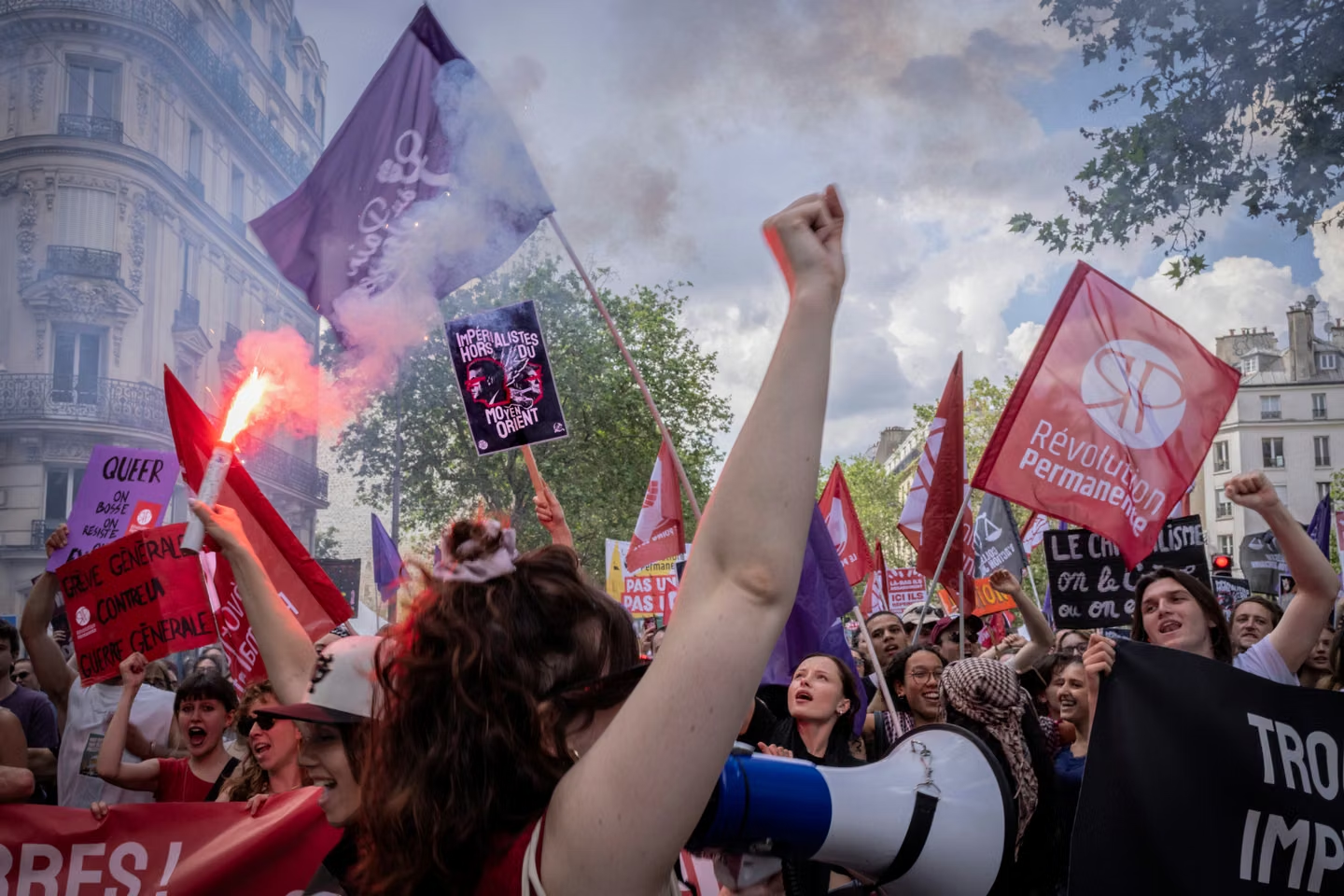
Short answer: France is going through its biggest protest wave in years. It began in late September 2026 with high school students angry about school conditions, and grew into a national movement against the cost of living, with more than 500,000 marchers and riots on 17 October. Turnout fell on the following Saturdays, 24 and 31 October, then rose to 575,000 on the national strike day of 5 November, according to the Interior Ministry. Paris remains open to visitors, with disruption concentrated on protest days and, on some nights, a partial curfew in two districts.
Last updated: 6 November 2026. A timeline by our team in Paris, updated as the situation changes.
Travelling in the next few days? We operate 24/7, strike days included, from €110 per vehicle between CDG or Orly and central Paris, with free cancellation up to 24 hours before pickup. Message us on WhatsApp, we usually reply within 30 minutes.
Key Facts (6 November 2026)
- Why people are protesting: school conditions first, then wages, prices and public services.
- Turnout across France: about 550,000 on 17 October, 410,000 on 24 October, 320,000 on 31 October and 575,000 on 5 November, according to the Interior Ministry.
- Worst day so far: Saturday 17 October, with more than 500,000 marchers across France and rioting in the evening.
- Arrests: about 2,700 after the 17 and 18 October weekend, according to the French authorities quoted by AFP on 24 October.
- Curfew in Paris: 11 pm to 6 am around Place de la République and Châtelet-Les Halles, on several nights since 19 October, most recently on the nights of 31 October and 1 November. No new curfew had been announced at the time of writing.
- Official travel advice: the US State Department keeps France at Level 2 (exercise increased caution), unchanged since the protests began.
- Next dates: Saturday 7 November (Yellow Vests' gathering at Place de la Concorde banned by the Police Prefecture, union march from République to Nation) and Monday 9 November (social conference with the Prime Minister).
Why Are People Protesting in France?
The movement began in high schools around Paris at the end of September. Students blocked their schools to protest against crumbling buildings, overcrowded classes and teacher shortages, as CBS News reported. Blockades spread to schools across France, and university students joined in.
In October, the demands widened to wages that no longer keep up with inflation, the cost of living and the state of public services. France is also six months away from a presidential election, planned for April 2027, which raises the political temperature.
Who Is Behind the Protests?
- High school and university students, through their own unions and organisations. They started the movement.
- Trade unions, led by the CGT, joined by most other unions. They call the national strike days, including 5 November. On 31 October, the CGT, FO, FSU and Solidaires marched in Paris with student and youth organisations (Fage, Union étudiante, Unef).
- "Yellow vest" groups, a citizens' movement born in 2018 from protests against fuel taxes, which joined the Saturday protests. On 31 October, their own Bastille to Concorde march and their sit-in outside the National Assembly were banned.
The government blames the violence on "ultra-left" groups and criminals, not on the marchers themselves. Prime Minister Sébastien Lecornu has acknowledged that the students' protests are legitimate.
Timeline: What Happened, Day by Day
Late September: school blockades
High school students block their schools, first around Paris, then nationwide. Some blockades end in clashes with the police, and several schools are closed by the authorities.
Early October: the movement grows
University students join and marches follow every week. On 5 October, the US Embassy in Paris warns American citizens that student protests continue across France.
Saturday 17 October: the national day of protest
More than 500,000 people march across France. Most marches are peaceful, but rioters break away in the evening. In Paris, shops are looted around Place de la République and Les Halles, and residents of Rue Yves Toudic, in the 10th arrondissement, wake up to burned cars. Outside Paris, the 19th-century town hall of Limoges burns down, a building on a central square in Lyon is set on fire and the city hall of Marseille is stormed and vandalised, according to CBS News.
18 and 19 October: a presidential address and talk of a state of emergency
In a televised address, President Emmanuel Macron promises that "those who sought to bring down the republic will be held accountable." Prime Minister Lecornu says the police "had lost control" during the unrest and that he is ready to declare a state of emergency "if needed."
19 to 21 October: curfews
Paris imposes a night curfew from 11 pm to 6 am around Place de la République and Les Halles, and bans gatherings after 8 pm. Lyon and Nice impose curfews from 9 pm. By 20 October, more than 2,500 people had been taken into custody, according to CBS News. On 21 October, union leaders meet the Prime Minister, leave disappointed and call a national strike day for 5 November, as Euronews reported.
22 and 23 October: preparing for a second Saturday
The US Embassy warns that violence "may continue." The government announces about 70,000 police officers and gendarmes nationwide for Saturday, and the Louvre and other major Paris museums announce they will close for the day, according to France 24.
Saturday 24 October: a smaller second Saturday
Police count about 110,000 marchers in Paris on a route moved to the southern edge of the city. The march is calm until the end, when police use tear gas and a water cannon near the end point, Porte de Vincennes. Across France, about 410,000 people march according to the Interior Ministry, against 550,000 on 17 October. Read our full report on what happened at the 24 October protest.
Monday 26 October: measures for schools
The government announces measures for high schools and universities: the Parcoursup admissions platform will be replaced from 2028, classes will be capped at 28 pupils from 2027, starting with the first year of lycée in the least advantaged public schools, and the State will lend the regions 4 billion euros to renovate schools, as Le Bonbon reported. Student organisations say the measures do not go far enough. That night, the curfew applies around République only, until 6 am on 27 October.
28 to 30 October: court rulings and a new curfew
On 28 October, the Paris Administrative Court suspends a night curfew for unaccompanied minors. The Police Prefecture issues a new one the next day, from 9 pm to 6 am in several areas including Étoile, the Champs-Élysées, Madeleine and Gare Saint-Lazare, for the nights of 30 October to 2 November. On 30 October, it reinstates the 11 pm curfew around République and Châtelet-Les Halles for the nights of 31 October and 1 November, according to Sortiraparis. Overnight into 31 October, the Council of State upholds the ban on the Bastille to Nation route, overturning a ruling in the unions' favour.
Saturday 31 October: a third Saturday, with clashes at the end
About 320,000 people march across France according to the Interior Ministry; the organisers count nearly half a million. In Paris, the police count about 70,000 marchers, from Porte de Bagnolet to Porte de Charenton on the outer boulevards. When the march reaches its end point, several hundred rioters attack the police, and a gendarme is hit by a Molotov cocktail. The Paris prosecutor opens an attempted murder investigation. Over the weekend, more than 770 people are arrested across France, while damage to shops is much lower than before, with about 20 businesses affected, according to ABC News.
Thursday 5 November: the national strike day
Almost all unions call a national strike and protest day. The Interior Ministry counts 575,000 protesters across France, including 60,000 in Paris; the CGT counts nearly 1.6 million, including 350,000 in Paris, as France 24 reported. The Paris march goes from République to Nation along Boulevard Voltaire. The RATP closes 25 metro stations from 11 am at the request of the police, trains are reduced, and the Eiffel Tower stays closed all day.
Is Paris Still Open to Visitors?
Yes. Hotels, restaurants, shops and most museums are open on normal days, and CDG and Orly airports are operating. The disruption follows a pattern: it is concentrated on protest days, along the march routes and, on the nights when it applies, in the two curfew zones. Major museums such as the Louvre and the Musée d'Orsay can close on big protest days, so check before you go.
To know which districts to avoid, see our guide to the Paris curfew and protest areas. If you would rather spend a protest day outside the city, read about day trips that are still possible.
What Comes Next?
The Yellow Vests called for strikes and blockades on Friday 6 November. On Saturday 7 November, the Police Prefecture has banned their gathering at Place de la Concorde at 2 pm, and the organisers say they will go anyway, according to Sortiraparis. The authorised union march goes from République to Nation at 2 pm. Prime Minister Lecornu meets unions and employers at a social conference on Monday 9 November. The CGT says the movement will only end with an answer to its demands, but no new national date is confirmed. For the full calendar and what it means for flights and trains, see our November 2026 travel outlook.
Frequently Asked Questions
Why are people protesting in France in 2026?
The 2026 protests in France started with high school students protesting against school conditions in late September, then widened to wages, the cost of living and public services, with unions and "yellow vest" groups joining in October.
Who is organising the protests in France?
Student organisations started the movement. Trade unions led by the CGT call the national strike days, and "yellow vest" groups organise Saturday actions.
What are the yellow vests?
The "yellow vests" (gilets jaunes) are a French citizens' movement born in 2018 from protests against fuel taxes. In October 2026, yellow vest groups joined the protests against the cost of living.
When did the Paris protests turn violent?
The worst violence in Paris came on the evening of Saturday 17 October 2026 and the following day, when rioters broke away from the marches and looted shops around Place de la République and Les Halles.
Is there a curfew in Paris?
The partial night curfew, from 11 pm to 6 am around Place de la République and Châtelet-Les Halles only, last applied on the nights of 31 October and 1 November 2026, and was due to end at 6 am on Monday 2 November. No new curfew had been announced at the time of writing, but the authorities have reinstated it before a protest weekend, so check the news before a late evening in these areas. A separate 9 pm curfew for unaccompanied minors applied in a few other areas, including around the Champs-Élysées, from 30 October to 2 November.
Are the protests in Paris over?
Not yet. Turnout fell each Saturday in October, to about 320,000 across France on 31 October, then rose to 575,000 on the national strike day of 5 November, according to the Interior Ministry. The Yellow Vests have called new actions for 6 and 7 November.
Can you get a private transfer in Paris during the protests?
Yes. Samantha Travels runs 24/7 in Paris, including on protest days, and plans each route around the marches, closed stations and curfew zones.
Getting Around Paris with Samantha Travels
We remain available 24/7 for airport, city and long-distance trips during the protests. On protest days, we check the announced marches, closed metro stations and curfew zones before each ride, and we adapt the route and the pickup point as far as possible. Our airport transfers include flight tracking, a meeting inside the arrivals hall and 60 minutes of free waiting after landing, and hourly hire keeps a car and chauffeur with you for the day. The price is fixed per vehicle when you book, with free cancellation up to 24 hours before pickup (see our booking terms).
Tell us your dates, flight and hotel: request a quote for your transfer or message us on WhatsApp, we usually reply within 30 minutes.
Read Next
- Paris strike today: what is running, what is closed
- Paris strikes: the visitor's survival guide to getting around
- Is Paris safe to visit during the protests? Our main travel guide
- The 24 October 2026 protest in Paris: route, closures, arrests
- How to get around Paris on a first visit
Sources
- CBS News: France's leaders vow to restore order after weekend of violent riots (19 October 2026)
- CBS News: French government extends curfews after riots sweep across the country (20 October 2026)
- CBS News (AP): French police fire tear gas, arrest dozens amid another weekend of protests (24 October 2026)
- Euronews: Disappointed after meeting, French unions call for 5 November action (21 October 2026)
- France 24 (AFP): France to deploy 70,000 police ahead of new protests (23 October 2026)
- France 24 (AFP): French police fire tear gas during fresh protests (24 October 2026)
- France 24: Live coverage of the 24 October 2026 protests
- US Embassy in France: Security alert, 22 October 2026
- US Embassy in France: Demonstration alert update, 5 October 2026
- The Connexion: October 24 protest turnout falls by almost half (24 October 2026)
- France 24: Live coverage of the 31 October 2026 protests (31 October 2026)
- ABC News (Australia): France investigating attempted murder of riot police attacked with a Molotov cocktail (2 November 2026)
- Sortiraparis: Paris curfew extended again for the Halloween weekend, 31 October and 1 November (30 October 2026)
- Sortiraparis: 31 October demonstration in Paris, route and metro closures (31 October 2026)
- Le Bonbon (in French): Parcoursup and class sizes, the government's announcements (26 October 2026)